

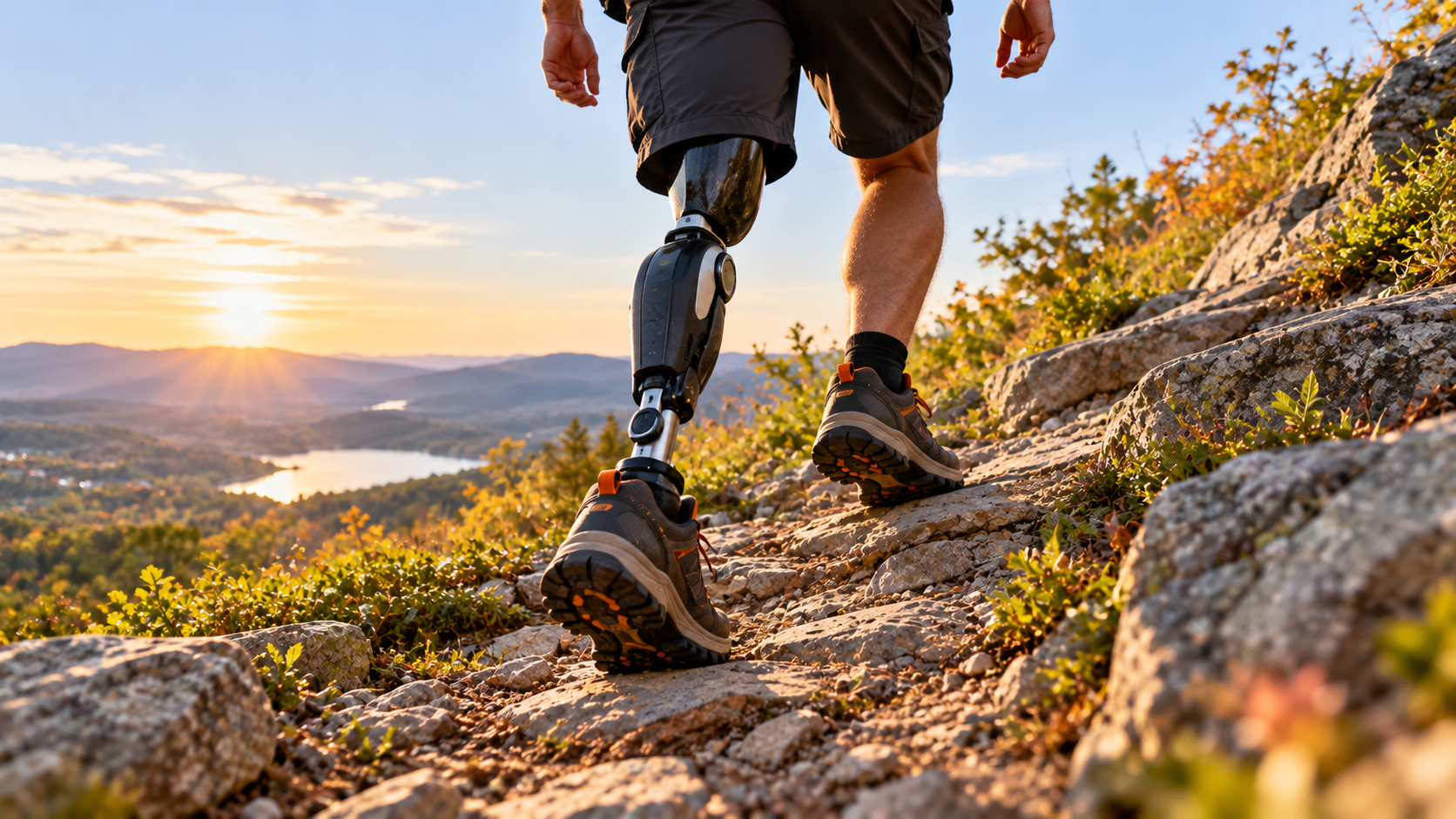
A hill that looks easy can feel much harder when you’re walking with a prosthetic leg. Your foot needs to meet the slope while your knee helps move you forward. If the ankle doesn’t adjust properly, each step can put more work on the rest of your body.
Some microprocessor ankles sense changes in your steps and adjust their angle or resistance as you climb. Certain models also lift the toes to help keep the foot from catching the ground. Firstcare Orthopaedics helps people looking for prosthetic devices in Warrenton, VA understand how these features work. Even small changes in the slope can affect how the ankle needs to move.
Here’s what happens when a microprocessor ankle responds to the demands of walking uphill.
Key Takeaways
- Microprocessor ankles adjust to uphill slopes, helping the foot meet the ground at a better angle.
- Small changes in ankle movement can affect knee pressure and how smoothly you climb.
- Some models lift the toes for better ground clearance, while powered ankles may provide extra help pushing uphill.
The Hill Changes What the Sensors Read
Your prosthetic ankle can sense a hill without knowing what lies ahead. As you climb, sensors track changes in foot movement and ankle position. These readings help the device recognize how your steps are changing.
Once the slope changes, the ankle’s computer uses that data to respond. Depending on the model, it may adjust the ankle angle or resistance. These changes help the foot adapt to the hill as you walk.
Forward Shin Movement Needs More Control
Walking uphill puts extra pressure on your lower leg as it moves forward. If the prosthetic ankle bends too freely, each step may feel unstable. Some microprocessor ankles control this movement through adjustable fluid resistance.
The right resistance allows your shin to move without bending too fast. Excess resistance can make climbing harder and put more strain on your leg. People exploring prosthetic devices in Warrenton, VA, can learn how these settings affect uphill walking.
Toe Clearance Matters Between Steps
Catching your toes on a steep hill can throw off your balance. As your prosthetic leg swings forward, the foot must pass above the ground. Some microprocessor ankles raise the toes during this movement to help prevent trips.
Tired legs can make lifting the foot harder as you climb. Extra toe clearance gives the foot more room to pass over rising ground. This feature may help you walk with greater confidence on uphill paths.
Are You in the Market for a New Prosthetic Device in Warrenton, VA?
A steep hill puts your prosthetic ankle to the test in ways flat ground never will. Foot angle, knee control, and toe clearance all affect how well you climb, while the device’s design determines how much help it provides. Firstcare Orthopaedics can help you understand these features and find out if your ankle needs an adjustment before your next climb.
Frequently Asked Questions
Why does my prosthetic knee feel different when walking uphill?
Climbing changes how your weight moves over the knee, which can make keeping your balance harder. A microprocessor ankle that adjusts its angle and resistance may help control this movement.
Will a microprocessor ankle stop my toes from catching on a hill?
Some microprocessor ankles lift the front of the foot during each step to create more space between the toes and the ground. This feature may reduce tripping risks, but it cannot prevent every stumble.
What happens when I reach the top of a hill with a microprocessor ankle?
The ankle must respond as the ground changes from a slope to a flat surface. Models with automatic terrain adjustment change their position or resistance, although the speed and smoothness of this response vary by device.