

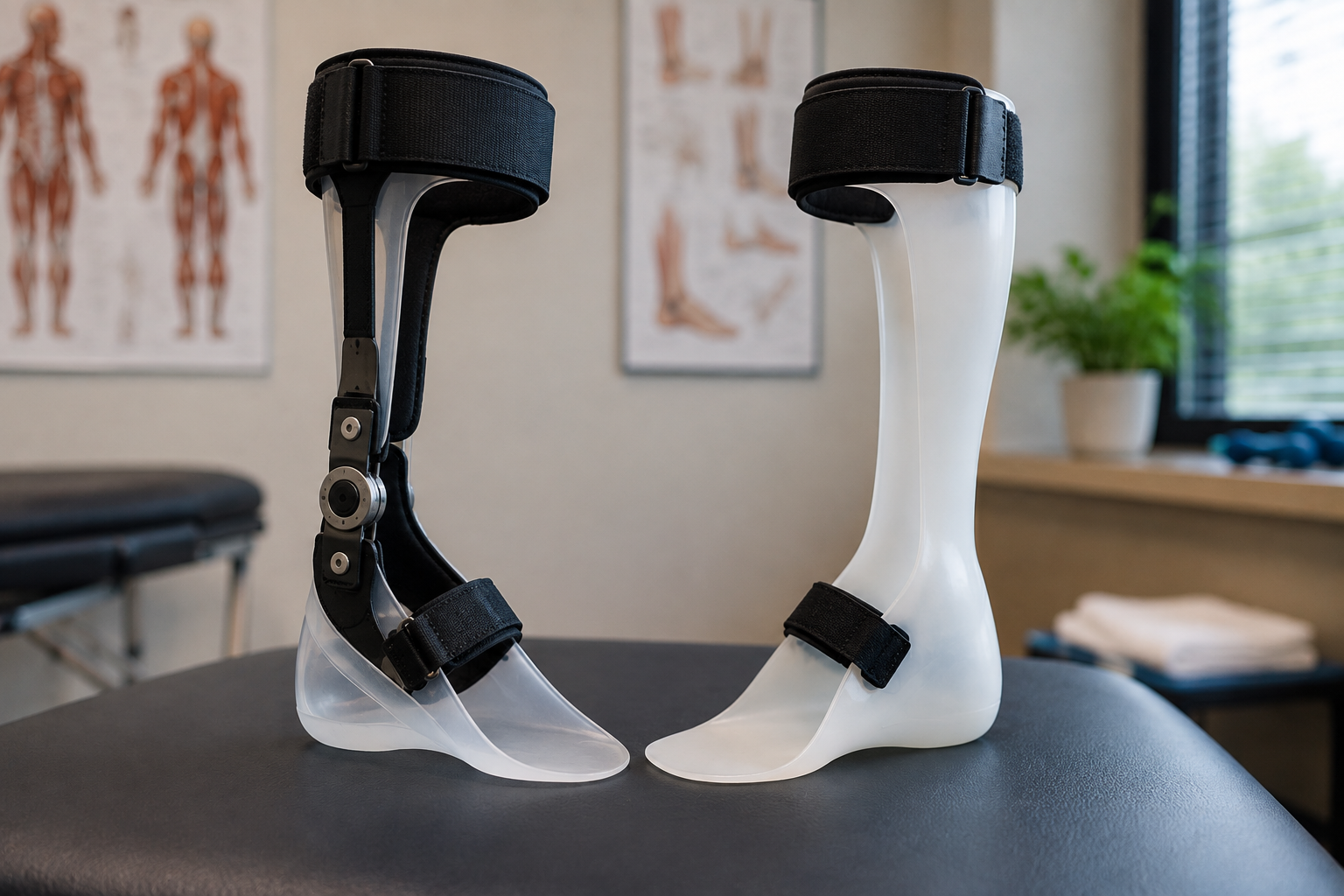
Choosing an ankle brace is not as simple as picking the design that looks more supportive. AFO ankle braces in Fairfax, VA, can serve different movement and stability goals depending on each person’s needs. Understanding those differences can make the fitting process feel much less confusing.
Firstcare Orthopaedics offers AFO options designed around different levels of motion and support. Hinged and solid-ankle designs each have a place depending on how the foot, ankle, and leg work together. Looking beyond the shape of the brace helps explain why one style may fit a certain movement goal better than another.
The real difference comes down to how each design manages movement while supporting the person wearing it.
Learn more about how hinged and solid-ankle AFOs approach plantar flexion control.
Key Takeaways
- Hinged and solid-ankle AFOs can support different movement goals without one being better than the other.
- Plantar flexion control can affect more than just the ankle, including knee motion and gait.
- The right AFO design depends on how much motion, guidance, and stability the person needs.
Different Designs Support Different Movement Goals
Brace design changes how much the ankle can move during each step. A hinged AFO can limit plantar flexion while still allowing some ankle motion. That added movement may help when a person needs support without fully locking the joint.
Solid-ankle AFOs give the foot and ankle firmer control. Greater support can help when keeping the lower leg stable is the main goal. The right design depends on how much movement and guidance the person needs while walking.
Solid-Ankle AFOs Offer Multi-Directional Control
Extra ankle motion can make walking harder to manage. Solid AFO ankle braces in Fairfax, VA, can help control plantar flexion while also limiting side-to-side movement. Their firm design can keep the foot in a steadier position during each step.
Rotation through the ankle can also affect how the leg moves forward. A solid-ankle design can give more control when the treatment plan calls for steady positioning. This support can help guide movement through more parts of the gait cycle.
Available Ankle Motion Helps Guide the Choice
Current ankle movement can shape which AFO design fits the treatment plan. Hinged braces may work well when keeping some natural motion is part of the goal. Limited motion needs can point toward a design that offers more control.
Stable positioning may matter more when the ankle needs firmer guidance. Solid-ankle AFOs can reduce unwanted movement and hold the foot in a steadier position. Choosing between the two depends on how much motion should stay and how much support is needed.
Contact Us for AFO Ankle Braces in Fairfax, VA
Hinged and solid-ankle AFOs each offer a different way to guide movement and support everyday walking. Firstcare Orthopaedics can help match the brace design to the amount of motion and stability a person needs. The right fit can make each step feel more controlled, comfortable, and natural.
Frequently Asked Questions
How does plantar flexion control affect walking in an AFO?
Plantar flexion control can change how the foot moves through each step and may also affect knee position. The amount of control needed depends on the person’s gait and movement goals.
Can ankle motion affect which AFO design is chosen?
Yes, the amount of useful ankle motion can help guide the choice between a hinged and solid-ankle AFO. Some people benefit from guided movement, while others need more consistent stabilization.
Why does AFO support extend beyond the ankle?
Foot and ankle movement can influence balance, knee motion, and the way the leg moves forward. An AFO can help manage these connected movements as part of a broader approach to walking support.