

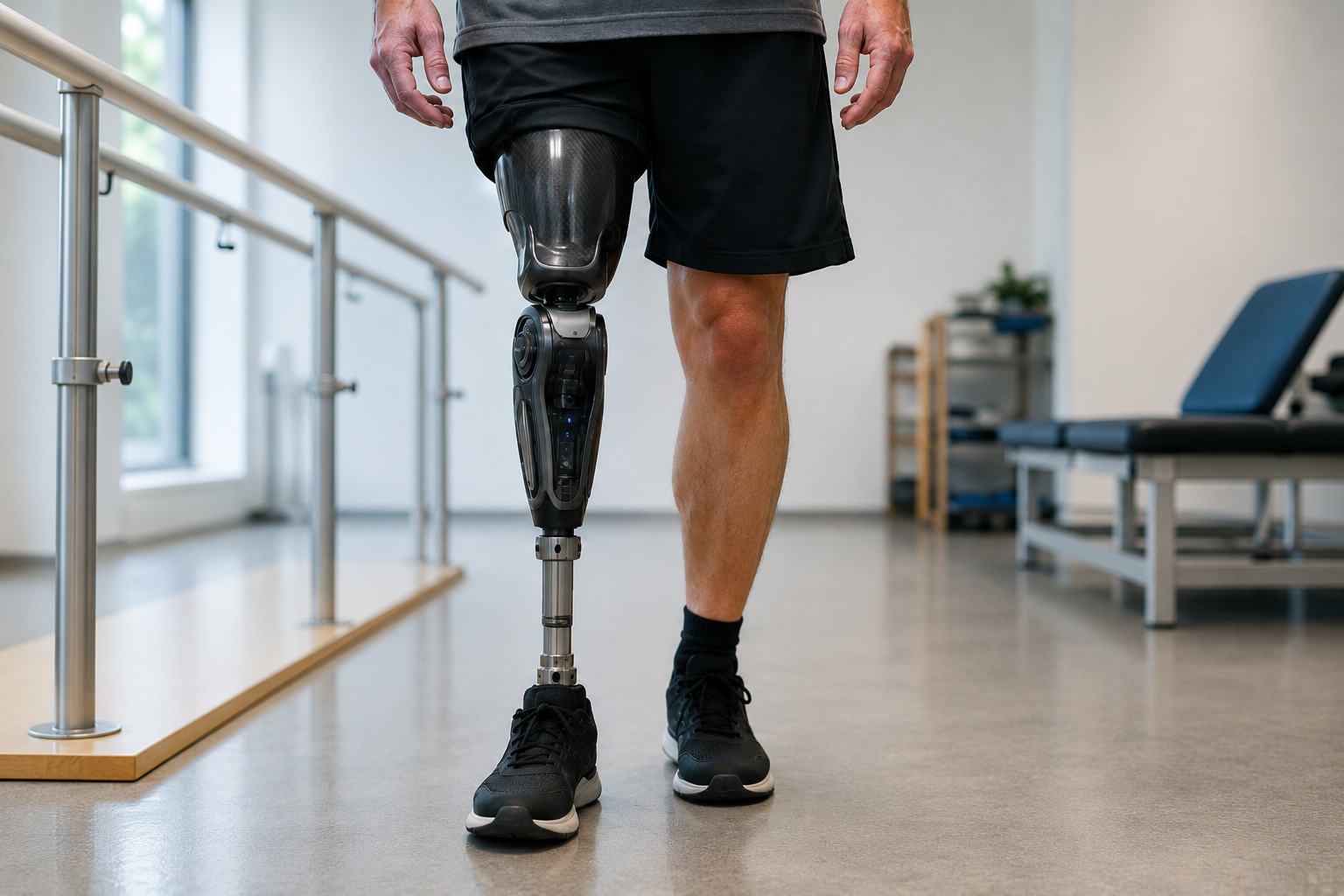
A prosthetic knee should help daily movement feel less like a guessing game. Modern prosthetic devices in Culpeper, VA, are built to support real steps, real surfaces, and real routines. Firstcare Orthopaedics offers prosthetic devices designed around comfort, control, and the way patients actually live.
Microprocessor knees bring a different level of response than standard prosthetic knees. Small changes in speed, balance, and ground surface all play a role in how the knee performs. Patients deserve to understand those differences before making a choice about their care.
Learn more about what makes a microprocessor knee different from a standard prosthetic knee.
Key Takeaways
- Microprocessor knees read movement and respond as each step changes.
- Stairs, slopes, speed, and uneven ground can change how much knee support a person needs.
- Advanced knee technology still needs the right fit, setup, and training to work well.
A Knee That Thinks With Every Step
A standard prosthetic knee often works best when each step stays steady and predictable. A microprocessor knee reacts when speed, balance, or ground surface changes. That extra response can help walking feel less stressful during real daily movement.
Patients may notice the difference most on stairs, ramps, grass, or uneven sidewalks. The knee reads motion and adjusts to provide support at the right time. Better control can make everyday movement feel less like a test and more like a normal part of the day.
Resistance Changes While You Move
Walking does not happen in one smooth pattern all day. A microprocessor knee can tighten when the body needs stability, then loosen when the leg needs to swing through. A standard knee usually has less built-in change, so the user may have to work harder during quick shifts.
Daily movement brings small surprises, like a curb, a turn, or a change in pace. The knee’s resistance can respond during those moments instead of staying locked into one feel. That quicker response can help the person move with more trust in each step.
Uneven Ground Feels Less Unpredictable
Sidewalks, grass, gravel, and ramps can change the feel of each step fast. Those small changes can make a person slow down, brace their body, or think harder about balance. A microprocessor knee helps respond when the ground shifts under the user.
Curbs and cracked pavement can ask for more control than a smooth floor. A standard knee can still support movement, but it may not react as quickly when the surface changes. A faster knee response can help the user move through daily spaces with less second-guessing.
A Better Life Starts With The Right Prosthetic Knee
A microprocessor knee helps patients feel more in control when daily movement changes. Stairs, slopes, speed shifts, and uneven ground all show why the right prosthetic choice matters. Firstcare Orthopaedics helps patients compare their options and move forward with more comfort.
Frequently Asked Questions
How does a microprocessor knee help with daily walking?
A microprocessor knee reads movement while you walk and adjusts support as each step changes. This can help with speed changes, turns, ramps, and uneven ground.
Is a microprocessor knee better for people who use stairs often?
A microprocessor knee can give more control while going down stairs because it manages how the knee bends. Standard prosthetic knees often place more work on the hips, arms, and sound leg.
What should I know before getting a microprocessor knee?
A microprocessor knee still needs the right socket fit, alignment, and training to work well. The technology can help, but comfort and control depend on how well the device fits your body and routine.